Why Emotional Regulation Matters for Co-Parents
7 self-regulation tips to stay child-focused, grounded, and calm in co-parenting conflict.
- 6 min read
- health & wellness
- custody

Co-parenting can bring up difficult emotions, even when you’re working hard to keep things respectful and child-focused with your ex. Between schedule changes, ongoing stress, and old dynamics that don’t disappear overnight, it’s easy to feel pulled into reactions you wouldn’t choose on a calmer day. If you’ve ever hit send too fast, raised your voice, or replayed an argument in your head for hours, you’re not alone.
Emotional regulation isn’t about ignoring what you feel or forcing yourself to be “fine”—it’s about noticing emotions, giving them room, and choosing what happens next so conflict doesn’t spill over into your kids’ lives or the rest of your day. These skills help you focus on what you can control and reduce harm, even when things don’t go the way you hoped. Keep reading to explore how emotional self-regulation works.
What is emotional regulation?
Psychology Today defines emotional regulation as a person’s ability to control and influence their emotions, especially heightened negative ones. Also called self-regulation, practicing emotional regulation helps you manage your feelings and be more intentional about your reactions. Many people build these skills by using tools like mindfulness, grounding, thought reframing, and other healthy coping strategies.
Here are some examples of what emotional regulation looks like in real life:
- Noticing you’re getting upset or overwhelmed and pausing to take a deep breath
- Naming and acknowledging whatever emotions you’re feeling before reacting
- Choosing to delay a written response until you can think and communicate clearly
- Refocusing on the initial purpose of a conversation if it’s sidetracked by conflict
- Letting yourself feel disappointed or irritated without turning it into an argument
- Feeling upset in an in-person discussion and taking a brief pause before continuing

Is regulating emotions the same as ignoring my feelings?
Emotional regulation is not the same as ignoring or suppressing your emotions. Even if it seems to keep the peace in the moment, pushing down your feelings instead of managing them can build your stress levels over time and contribute to burnout. When you don’t give yourself enough time and energy to process your emotions, you can end up feeling emotionally overwhelmed while the real issues go unaddressed.
Why does emotional self-regulation matter for co-parents?
Co-parenting comes with higher stakes than most relationships because your children are always part of the picture. When emotions run high, even small misunderstandings with your ex can turn into bigger conflicts that drain your energy and make everyday logistics harder than they need to be. Regardless of past dynamics, it’s essential to communicate clearly and make decisions to support your kids’ well-being.
In reality, emotional regulation also matters because co-parenting doesn’t always involve healthy collaboration or accountability. You can’t control your ex’s actions, but you can control when you engage, how you show up, and what you do when things get tense. In high-conflict situations, self-regulation becomes a harm-reduction tool that can help prevent conflict from affecting your household.
Can co-parenting conflicts make emotions feel more intense?
Co-parenting conflict can feel more intense because it rarely occurs in a vacuum. It’s often layered with stress, time pressure, and the emotional weight of your shared history, so small comments or last-minute changes can hit much harder than they would in other relationships. Since you and your ex are tied together by your children, the closest you can come to breaking that high-conflict tie is to choose parallel parenting.
Staying in control of your own feelings becomes even more challenging if you’re also pouring from an empty cup. When life feels unpredictable more often than not, your mind and body tend to stay on high alert, making it harder to reset and recover. Ongoing stress, reduced sleep, and constant mental load can reduce your emotional bandwidth, leaving you with less patience and less space to pause before reacting.

Does a co-parent’s self-regulation help their kids?
When you’re able to regulate your own emotions as a parent, it’s easier to stay present with your children, even during stressful moments. That steadiness can shape how you respond, how you communicate, and how quickly you’re able to repair things after a hard exchange. Over time, creating greater consistency and emotional safety for your kids can make it easier to help them foster a secure attachment style.
Having solid self-regulation skills can also make it easier to teach these skills in an age-appropriate way using co-regulation. Before kids can be self-sufficient in calming themselves, they need a steady adult who can guide them through tough moments with connection and reassurance. Those repeated experiences ultimately help your kids learn how to manage big feelings and start practicing self-regulation on their own.
7 emotional regulation tips for co-parents
Self-regulation can sound like a big, abstract goal, but it’s really built from consistent choices you make in everyday life. When you focus on giving yourself more control in the moments that matter, co-parenting stress doesn’t have as much of an effect on your parenting, your home, and the rest of your day. Here are 7 practical tips for using emotional regulation in stressful or high-conflict co-parenting situations.
1. Give yourself a moment before you respond
When emotions spike, your first reaction usually isn’t your best one—especially in situations that already feel stressful or loaded. Instead of reacting on autopilot, try the four-step approach from Harvard Health: stop, breathe, reflect, and choose. Whether you take a few deep breaths or a brief step away, give yourself enough time to reset before you respond in a way that’s child-focused and avoids escalating conflict.
2. Notice what you’re feeling and what led to it
Having a quick emotional check-in can help you shift tense moments from reactive to intentional. Name what you’re feeling, like frustration, anxiety, hurt, or overwhelm, and consider what may have happened to trigger those specific emotions. This kind of self-reflection can make it easier to respond with greater clarity and less intensity, instead of letting your feelings in the moment steer the conversation.
3. Find coping skills that help you manage stress
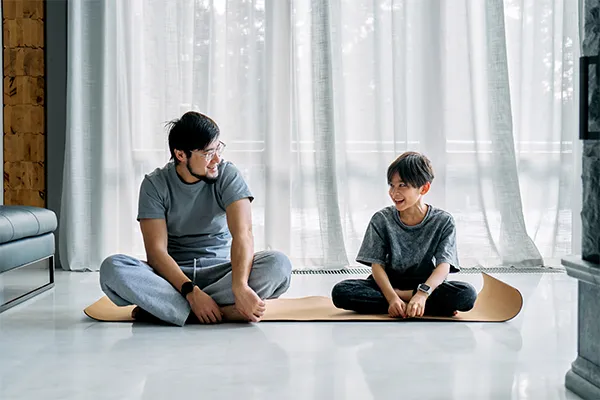
Self-regulation gets easier when you have a few healthy coping tools that you can depend on in tough moments. These can include taking a short walk, journaling, or using mindfulness and grounding techniques that may help you settle your body and mind. Building those habits also supports your baseline well-being over time, making it easier to stay steady during co-parenting stress and everyday parenting challenges.
4. Reframe negative thoughts into balanced ones
It’s easy for stress to trigger negative thought loops, like replaying the past or predicting how an interaction may go before it begins. After you’ve acknowledged your feelings, try reframing your thoughts by shifting from negative self-talk to more constructive, realistic assessments. That mindset shift can help you respond with more patience and clarity, and stay focused on what’s productive and child-centered right now.
5. Use boundaries as support, not a solo strategy
Healthy boundaries can help reduce conflict by limiting how stress and tension affect your time and energy. In co-parenting situations, that might look like setting limits around when you engage, which topics you’ll discuss, and how much back-and-forth you’re willing to continue if a conversation gets heated. When combined with other efforts, boundaries can help you protect your peace while still prioritizing your kids.
6. Focus on what you can control in your co-parenting
You can’t control your co-parent’s choices or willingness to cooperate, and trying to can keep you stuck in the same conflict cycles. Instead, bring your focus back to the choices that belong to you, like how you interpret what’s being said and what kind of response you’ll feel good about later. This approach can help you step out of power struggles and keep your side of interactions consistent—even if your ex’s isn’t.

7. Take time to rest and recover after tough moments
Even with strong self-regulation skills, some interactions will still leave you feeling tense, drained, or stuck in your head. Give yourself permission to recover by doing something that helps you decompress, like moving your body, talking to someone you trust, or resting. The more you do to protect your mental health, the easier it gets to keep hard exchanges from affecting your ability to show up for your kids and others.
What if my co-parenting stress feels overwhelming?
Self-regulation can make a big difference, but it can’t be your sole source of support. If your stress becomes constant, isolating, or too hard to manage, leaning on trusted people can help you feel steadier and less alone. Talking with friends or family members, joining a support group, or working with a therapist or counselor can help you process your situation and build a toolkit you can rely on in high-stress moments.
Add emotional regulation to your co-parenting with TalkingParents
While emotional self-regulation can’t influence how your co-parent shows up for your kids, it can help you move through stress more productively. Each time you pause, choose your words intentionally, and stay anchored in your children’s best interests, you can respond rather than react. These small shifts add up, even in high-conflict situations, when you practice them consistently and give yourself grace as you learn.
If you want an app that balances accountability and emotional regulation, TalkingParents can help. Our features help you manage all things co-parenting in one place, so you’re not carrying the mental load of tracking logistics, drafting messages, and more alone. With structure and support that help you document communication and stay grounded, you can stay focused on what matters most for you and your kids.